Closet organisation
Small Closet Organization Ideas Without Built-Ins
Make a small rental closet easier to use with zones, rail extenders, shelf dividers, vertical storage, and a realistic limit on what stays inside.
By Vivek · July 29, 2026
Save to Pinterest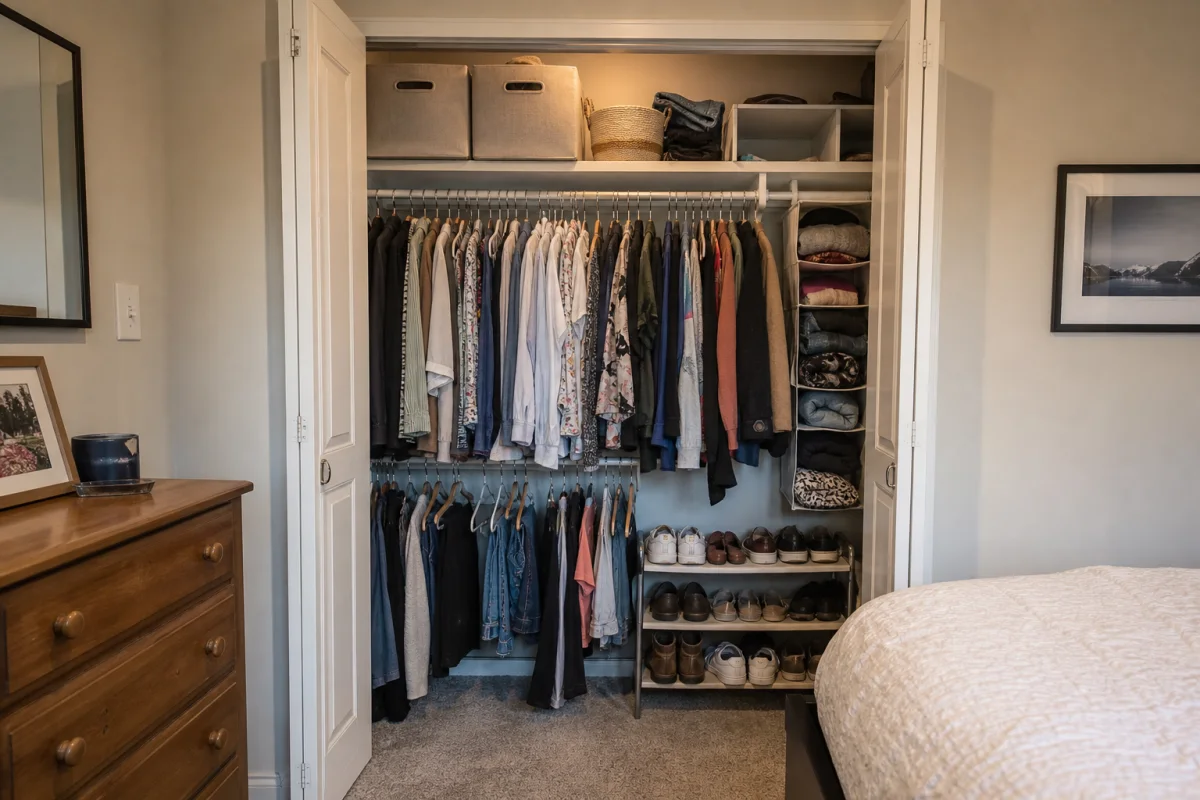
You probably do not need twenty closet organisers.
You need to stop wasting the height, protect the long-hanging space, and make the things at the back reachable.
That is the whole job.
A small closet feels unusable when every category competes for the same rail and shelf. The fix is to create zones before adding products.
Empty it once
Yes, all of it.
You cannot design storage around a mystery pile. Put similar things together: short hanging, long hanging, folded clothes, shoes, bags, accessories, bedding, and items that belong elsewhere.
Then measure:
- Internal width and depth.
- Rail height and diameter.
- Distance from rail to floor.
- Shelf width and height.
- Door opening and hinge clearance.
Save the measurements on your phone.
Zone 1: short hanging
Shirts, folded trousers, skirts, and short jackets do not need the full closet height.
This is where a hanging rail extender can create a second level.
Keep enough space between rails that clothes do not pile on the one below. If the lower section becomes crushed and hard to browse, the extra capacity is not useful.
Zone 2: long hanging
Leave one full-height section for dresses, coats, and long garments.
Do not install a second rail across the entire closet because a before-and-after picture looked impressive. Storage has to fit your clothes, not the photograph.
Zone 3: folded items
Use shelf dividers to stop stacks leaning into each other.
Keep stacks low enough that removing one item does not collapse the rest. File-folding can work inside drawers or boxes where the sides support the clothing.
Zone 4: shoes
Store daily shoes at the easiest level.
Use a low rack, narrow tower, or over-door organiser depending on the available space. Keep footwear dry and avoid blocking air circulation.
Shoeboxes only help when they are labelled and you actually return the shoes to them.
Zone 5: bags
Stuffing bags inside other bags saves space until you forget what you own.
Keep one or two bags nested if needed, then store the rest upright with dividers or on a light hook system. Support straps so they are not permanently creased.
Use the back of the door
An over-door organiser can hold shoes, accessories, or small folded items.
Check the door thickness and top clearance. Make sure the hooks do not damage the frame or stop the door closing.
If the closet has sliding doors, this option probably does not exist. Do not force it.
Use the top shelf for low-frequency items
The top shelf is not daily storage unless you enjoy using a step stool every morning.
Put seasonal clothes, spare bedding, or occasion items in labelled containers. Keep heavy boxes low enough to lift safely.
Add one vertical hanging organiser
A fabric hanging organiser can create shelves without drilling.
Use it for knitwear, gym clothes, or small bags. Avoid overloading it until the rail bows or the fabric shelves sag.
Match hangers by function
Slim hangers can save rail space, but not every garment benefits from them.
Use supportive hangers for coats and structured pieces. Use clips where folding would create creases. The goal is not visual uniformity if the clothes end up misshapen.
Put accessories in shallow storage
Belts, scarves, watches, and jewellery disappear in deep boxes.
Use shallow trays, small transparent drawers, or one hanging organiser. Keep valuable items stored appropriately rather than displayed near an exposed door.
Give laundry another home
Dirty clothes do not belong in the same organisation system as clean clothes.
Use a narrow hamper outside the closet or in a defined corner. If the hamper fills the closet floor, access to everything else becomes harder.
Keep a donation bag ready
Hang or place one small donation bag somewhere accessible.
When something no longer fits or gets used, put it there instead of returning it to premium closet space. When the bag is full, remove it.
Do not let the donation bag become permanent storage.
What not to buy first
Avoid:
- A large drawer unit before measuring the door opening.
- Vacuum bags for daily clothes.
- Identical boxes with no labels.
- A second rail if most clothing is long.
- Heavy adhesive shelves inside a dusty closet.
- Shoe storage for more shoes than you actually wear.
The phrase “double your closet space” is slightly misleading.
You are not creating space.
You are making the existing height and depth easier to use.
That is still valuable. It is also more honest.
Continue with the room-by-room apartment storage plan or budget bedroom makeover.